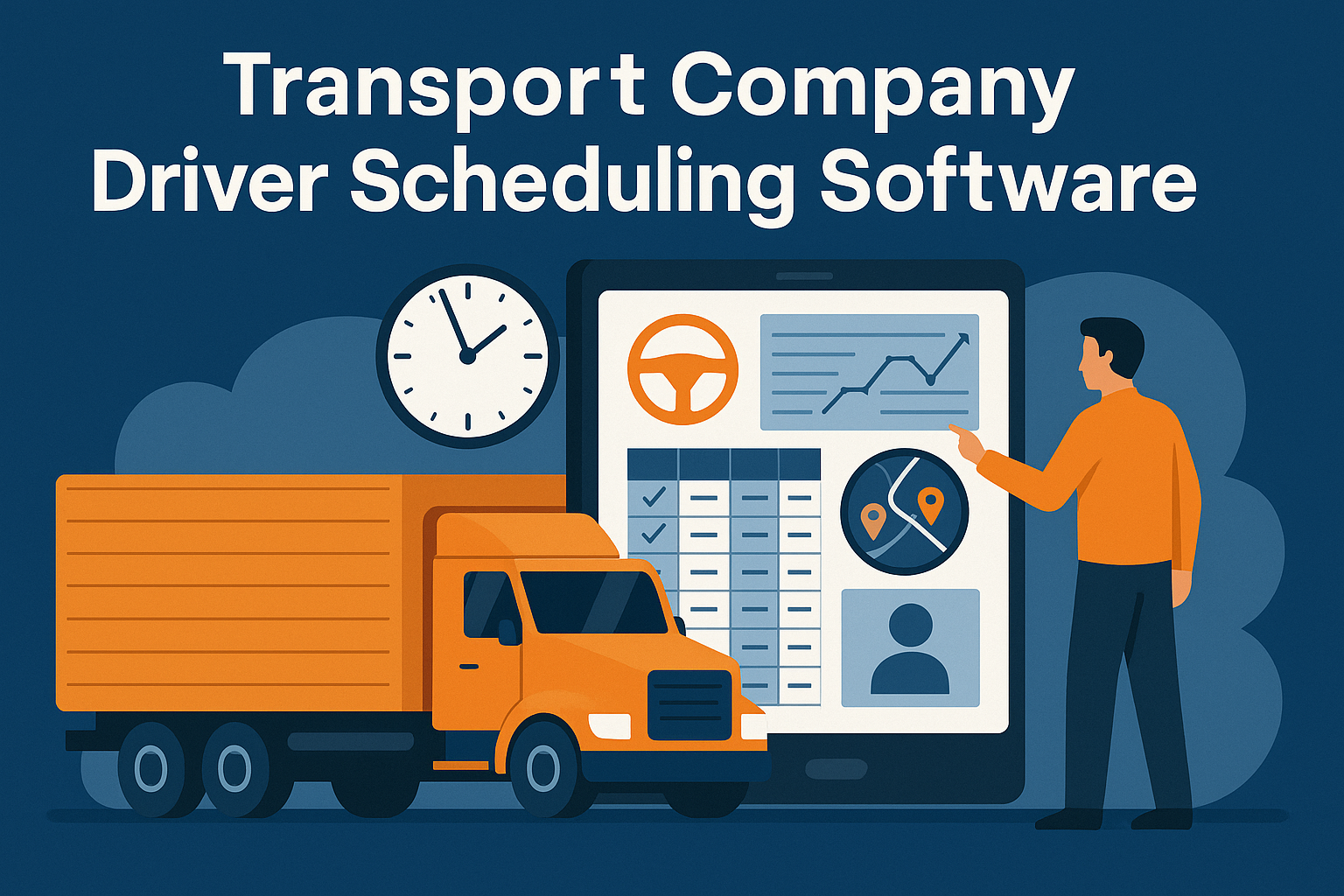

Comprehensive Guide to Transport Company Driver Scheduling Software:
The roar of engines, the hum of logistics – in the dynamic world of transport, every moment counts. In today’s fast-paced environment, merely getting from point A to point B isn’t enough. Transport companies are now leveraging cutting-edge technology to achieve peak efficiency, unparalleled compliance, and a significant competitive edge. Welcome to the era of driver scheduling software, an indispensable tool that’s transforming how fleets operate.
Based on extensive research from industry-leading sources, this guide explores everything transport company managers need to know about implementing effective driver scheduling solutions. We’ll delve into the vital features that drive success, the tangible benefits that translate to your bottom line, and the top solutions poised to dominate the market in 2025. Get ready to embark on a journey that will revolutionize your fleet management! 🚀
Key Features of Modern Driver Scheduling Software
Gone are the days of manual spreadsheets and frantic phone calls. Modern driver scheduling software is a powerhouse of integrated functionalities designed to automate, optimize, and empower.
- 1. Hours of Service (HOS) Tracking: Your Compliance Lifeline 🛣️
- Essential for ELD mandate compliance (as highlighted by DispatchCommodity), this feature is non-negotiable.
- It automatically tracks driving time, breaks, and crucial rest periods.
- Crucially, it provides real-time alerts when drivers approach or exceed HOS limits, safeguarding against costly violations and driver fatigue.
- 2. Real-Time Scheduling and Load Management: Dynamic Control at Your Fingertips 📊
- Imagine a system that can dynamically assign drivers to loads based on availability, location, and even specific skills – this is it! (DumpTruckDispatcher emphasizes this critical capability).
- Visual interfaces provide an immediate overview of current assignments and upcoming schedules.
- The true magic lies in its ability to automatically reshuffle assignments when unexpected delays or issues occur, keeping your operations relentlessly agile.
- 3. Driver-Facing Tools (Mobile Apps/Portals): Empowering Your Workforce On the Go 📱
- Drivers are your frontline, and giving them mobile access to view schedules, navigation, and customer details empowers them like never before.
- Digital proof of delivery features streamline administrative tasks.
- Integrated real-time communication channels between drivers and dispatchers foster seamless collaboration, as noted by Fleetio.
- 4. Automated Scheduling Capabilities: The Brains Behind the Brawn 🧠
- This is where Artificial Intelligence (AI) truly shines, propelling optimal scheduling.
- Rules-based assignment considers driver preferences, qualifications, and all legal requirements (Onfleet showcases its advanced capabilities in this area).
- Features like shift swapping and time-off request management reduce administrative burden and boost driver satisfaction.
- 5. Route Optimization: Smarter Miles, Lower Costs 🗺️
- Deep GPS integration underpins real-time route planning, ensuring the most efficient paths.
- Advanced algorithms perform traffic pattern analysis and facilitate dynamic rerouting to avoid bottlenecks.
- Multi-stop optimization algorithms ensure that every leg of the journey is as efficient as possible.
- 6. Integrated Fleet Maintenance Tracking: Proactive, Not Reactive 🛠️
- Beyond just scheduling drivers, top-tier software enables the intelligent scheduling of preventive maintenance (MyShyft highlights this integration).
- Comprehensive service history and parts inventory management mean you’re always prepared.
- The goal? Downtime minimization through proactive scheduling, keeping your fleet on the road and earning.
Benefits of Implementing Driver Scheduling Software: The ROI You Need
Investing in driver scheduling software isn’t just about modernizing; it’s about achieving quantifiable improvements across your entire operation.
“Connecteam’s solution shows how real-time tracking of drivers reduces idle time by up to 30%.” – Connecteam
- Operational Efficiency Gains: Real-time visibility and optimized assignment translate into significantly reduced idle time and smoother workflows.
- Regulatory Compliance: Automated HOS tracking and detailed record-keeping help you avoid costly violations and safety audit failures, ensuring continuous operational legality.
- Cost Reduction: For instance, NEMT providers report up to 50% savings in dispatch costs compared to manual methods (NEMTrepreneur), demonstrating massive financial returns. This extends to fuel, labor, and maintenance expenses.
- Improved Communication: Built-in messaging, real-time status updates, and mobile access create unprecedented transparency across your operations, fostering better teamwork.
- Data-Driven Decision Making: Comprehensive reporting and analytical dashboards provide profound insights for continuous improvement, allowing you to identify trends, optimize strategies, and make smarter business decisions.
Top Driver Scheduling Software Solutions for 2025
The market is rich with solutions, each catering to different operational scales and needs. Here’s a breakdown of the leading categories and examples:
- 1. Transportation Management Systems (TMS): The Enterprise Backbone 🌐
- These are end-to-end solutions from powerhouses like Blue Yonder and BluJay (Gartner consistently ranks them high).
- They offer multimodal planning across entire supply chains.
- Key features include AI-driven capacity forecasting and dynamic management for complex logistics.
- 2. Specialized Trucking Dispatch Software: Tailored for Trucking 🚚
- Top-rated options in this category are specifically designed to optimize dispatch operations for truck fleets (SupplyChainDive reviews these solutions extensively).
- They offer features tailored to LTL (Less-Than-Truckload), FTL (Full-Truckload), and specialized hauling.
- Often include integrated fuel tax reporting and IFTA compliance, critical for long-haul operations.
- 3. Last-Mile Delivery Solutions: Mastering the Final Stretch 📦
- Recognized among the 10 best delivery scheduling platforms, providers like Onfleet excel in final-mile efficiency (eLogii praises their capabilities).
- Critical features include customer ETA notifications and secure signature capture.
- Advanced urban route optimization algorithms are a must for navigating complex city environments.
- 4. Comprehensive Fleet Management Platforms: All-in-One Powerhouses🚦
- SafetyCulture’s review highlights top systems that combine scheduling with safety and compliance.
- Look for integrated video telematics and driver coaching for enhanced safety.
- These platforms often provide fleet performance benchmarking to measure and improve against industry standards.
Implementation Considerations: Paving the Way for Success
Choosing the right software is just the first step. Successful implementation requires careful planning and execution.
- Cost Factors: Understanding Your Investment 💰
- Pricing typically ranges from
$5 to $42+ per vehicle monthly(as reported by Capterra), but can vary significantly based on features and scale. - Cloud-based SaaS models are prevalent, reducing upfront capital expenses and providing greater scalability.
- A compelling selling point: ROI is typically achieved within 6-18 months through the compounded efficiency gains.
- Pricing typically ranges from
- Integration Requirements: Seamless Connectivity 🔗
- Ensure compatibility with your existing telematics and ERP systems for holistic data flow.
- API availability is crucial for future-proofing and enabling custom workflows.
- Don’t overlook data migration support from your legacy systems – this can be a critical success factor.
- Training and Change Management: Empowering Your Team 💪
- Opt for solutions with intuitive, mobile-first interfaces to reduce learning curves.
- Ensure role-based access and permissions to tailor user experience and data security.
- Embrace a culture of continuous improvement through user feedback – your drivers and dispatchers are your best resource!
The Future of Driver Scheduling Technology: What’s Next? 🔮
The road ahead for transport technology is exciting, driven by innovation and increasingly intelligent systems. Emerging trends include:
- Predictive scheduling using advanced machine learning algorithms to anticipate demand and optimize resource allocation proactively.
- Seamless autonomous vehicle integration planning, preparing for a future where human drivers and self-driving vehicles coexist in logistics.
- The use of blockchain for secure load tracking and transparent supply chain operations.
- Augmented reality applications for immersive driver training and enhanced navigation.
Conclusion: Drive Your Business Forward with Smart Scheduling
Modern driver scheduling software represents a critical investment for transport companies looking to maintain a competitive advantage, reduce operational friction, and pave the way for sustainable growth. The most successful implementations combine robust technical capabilities with thoughtful change management and continuous optimization.
By carefully evaluating options against specific operational needs, fleet managers can realize substantial improvements in efficiency, compliance, and, crucially, customer service. For companies just beginning their digital transformation, starting with core scheduling functionality and gradually adding advanced features often proves most effective. The solutions highlighted in this guide represent proven options across various transport sectors, each with particular strengths for different operational models.